
Underwater Sea Diving: Your Complete Guide to Exploring the Ocean Depths
Learn how underwater sea diving works, what gear you need, certification costs, safety tips, and the best beginner destinations to start your journey.

Imagine descending into crystal-clear water, weightless and surrounded by vibrant marine life in a world that 95% of humanity will never experience. Underwater sea diving opens access to the largest ecosystem on Earth, but where do you actually start?
This comprehensive guide cuts through the confusion with honest, practical information about what underwater sea diving involves, how to get started safely, and whether it's right for you. We'll cover the fundamentals, realistic costs, essential safety information, and your pathway from beginner to certified diver. If you wear glasses or contacts, a mask built to your prescription makes a huge difference to what you actually see down there, so see what’s available before you book your first dive.
What is Underwater Sea Diving? Understanding the Basics
Defining Underwater Sea Diving vs. Other Water Activities
Snorkeling keeps you at the surface, breathing through a tube while floating face-down. No training required, but you're limited to shallow water (typically 10-15 feet).
Freediving involves holding your breath and diving down without breathing apparatus. Recreational freedivers typically reach 30-60 feet, with bottom time measured in seconds or minutes.
Underwater sea diving (commonly called scuba diving, or Self-Contained Underwater Breathing Apparatus) allows you to carry compressed air on your back, breathing normally underwater for 30-60 minutes per dive. Recreational scuba diving takes you from the surface down to 130 feet, though beginners start much shallower.
|
Activity |
Max Depth |
Training Required |
Bottom Time |
|
Snorkeling |
Surface to 15 ft |
None |
Unlimited |
|
Freediving |
30-130+ ft |
Recommended |
1-3 minutes |
|
Scuba Diving |
40-130 ft (recreational) |
Certification required |
30-60 minutes |
How Underwater Diving Actually Works
At the surface, we breathe air at normal atmospheric pressure. For every 33 feet you descend, pressure increases by one additional atmosphere. Your scuba equipment delivers air at the same pressure as surrounding water, allowing normal breathing at any depth.
Here's what diving actually feels like. Initially, you'll notice the weight of equipment: about 40-50 pounds. But underwater, proper buoyancy control makes you essentially weightless, gliding through three-dimensional space with minimal effort.
Breathing takes adjustment. Your first few dives, the sound through the regulator seems loud and mechanical. Within a few dives, it becomes meditative and peaceful.
Vision underwater differs significantly. Water magnifies everything by about 25%, making objects appear closer and larger. Colors shift. Reds and oranges disappear first at depth, while blues and greens remain visible. This is where crystal-clear vision becomes crucial. Many divers who need vision correction opt for custom prescription dive masks rather than risk contacts underwater.
Types of Underwater Sea Diving
Recreational Scuba Diving
Recreational diving encompasses what 95% of certified divers do: exploring depths from the surface to 130 feet using standard equipment. Most recreational dives stay between 40-80 feet.
Typical experiences include:
● Reef diving: Exploring coral reefs with colorful fish and marine life at 30-60 feet
● Wreck diving: Descending to explore sunken ships serving as artificial reefs
● Wall diving: Following underwater cliff faces that drop into the abyss
Most recreational dives last 45-60 minutes. The marine life you encounter depends on location. Caribbean reefs offer tropical fish and sea turtles, Pacific Northwest waters feature giant octopuses and kelp forests, while tropical locations provide encounters with manta rays and whale sharks.
For those concerned about seeing these creatures clearly, single lens dive masks offer the widest field of view and are particularly popular with underwater photographers.
Specialized Diving Disciplines
· Technical diving pushes beyond recreational limits, involving deeper depths (130+ feet), decompression stops, or cave penetration. This requires extensive additional training and specialized equipment.
· Freediving has evolved into its own sport, with modern recreational freedivers training to dive comfortably to 60-100 feet on a single breath. For freediving, low-volume masks are essential because they require less equalization effort.
· Professional diving careers include commercial diving (oil rigs, underwater construction), scientific diving (marine biology research), and military diving (special operations).
Essential Equipment for Underwater Sea Diving
Core Equipment Explained
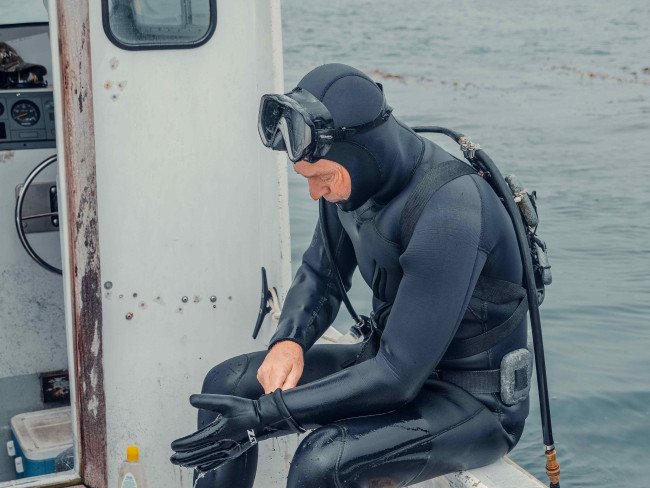
Your diving mask creates an air space allowing you to focus underwater. For divers requiring vision correction, the decision between contacts and prescription masks is significant. Prescription masks eliminate concerns about lens displacement or eye irritation. Twin lens prescription masks accommodate complex prescriptions including astigmatism correction.
Fins convert leg strength into efficient propulsion. Exposure protection ranges from thin wetsuits for tropical water to drysuits for cold water.
The Life Support System:
· Your scuba cylinder stores compressed air at 3,000 PSI. Standard aluminum 80 cubic foot tanks provide 45-60 minutes of air for recreational depths.
· The regulator reduces high-pressure air to breathable pressure and includes your mouthpiece, alternate air source, and pressure gauges.
· Your Buoyancy Control Device (BCD) is an inflatable vest letting you achieve neutral buoyancy at any depth.
A dive computer tracks depth, bottom time, and calculates safe no-decompression limits in real-time. Additional equipment includes weights, dive lights, and cutting tools.
Realistic Equipment Costs
Rental Approach (1-3 dives per year):
Full equipment rental costs $40-70 per day. Most divers prefer owning their own mask for fit and hygiene. A quality prescription dive mask, such as those from the See The Sea RX official store, costs $150-400 and lasts indefinitely with proper care.
Budget Purchase Approach (4+ dives per year):
● Personal gear (mask, fins, boots): $300-500
● Wetsuit: $150-400
● Regulator set: $400-700
● BCD: $300-600
● Dive computer: $250-500
● Total: $1,550-3,000
The purchase approach breaks even after roughly 6-10 dive trips.
Training and Certification
Understanding Certification
PADI, SSI, and NAUI dominate the certification market, teaching essentially identical skills. Dive shops worldwide require certification cards before filling tanks or allowing you on dive boats.
Certification levels:
● Open Water Diver: Entry-level, allowing diving to 60 feet
● Advanced Open Water Diver: Deep diving to 100 feet, navigation, specialty skills
● Rescue Diver: Accident prevention and emergency response
● Divemaster: First professional level
The Training Process
Phase 1: Knowledge Development (8-12 hours)
Online learning or classroom covering diving physics, equipment, dive planning, and safety practices.
Phase 2: Confined Water Training (4-6 hours)
Pool practice of fundamental skills: equipment assembly, breathing underwater, mask clearing, buoyancy control, and emergency procedures.
Phase 3: Open Water Dives (4 dives over 2 days)
Taking skills to actual diving conditions, progressively building confidence from 20 feet to 60 feet.
Costs and Requirements
Complete Certification Costs:
● US/Canada/Europe: $350-600
● Caribbean: $300-450
● Southeast Asia: $250-350
Requirements:
● Minimum age: 10-12 years for junior certification
● Swimming ability: 200 meters without stopping
● Medical fitness: Certain conditions require physician clearance
Certification courses maintain approximately 95% pass rates. Common challenges include mask clearing, ear equalization, and buoyancy control, all mastered with practice.
Safety and Risks
Understanding Real Risks
Recreational diving has approximately 16 fatalities per year per 100,000 active divers, similar to marathon running and significantly safer than horseback riding or skiing. Nearly all diving fatalities involve multiple factors, with running out of air and rapid ascent as leading causes.
Common injuries and prevention:
· Decompression Sickness (DCS) occurs when nitrogen absorbed during diving forms bubbles during ascent. Prevention: follow your dive computer's limits, make slow ascents, and include safety stops. DCS affects fewer than 1 in 5,000 dives.
· Barotrauma affects ears and sinuses. Prevention: equalize pressure frequently during descent by pinching your nose and gently blowing.
· Environmental hazards like marine life injuries are overstated. Shark attacks on divers are extraordinarily rare.
Essential Safety Protocols
· The Buddy System: Never dive alone. Buddies provide redundancy and assistance.
· Pre-Dive Safety Checks: Before entering water, systematically check your buddy's equipment: BCD, weights, releases, air, and final details.
When NOT to Dive:
● Within 24 hours before flying
● When congested, sick, or taking alertness-affecting medications
● After consuming alcohol
● When conditions exceed your training
● When equipment isn't functioning properly
Your First Dive
The Discover Scuba Experience
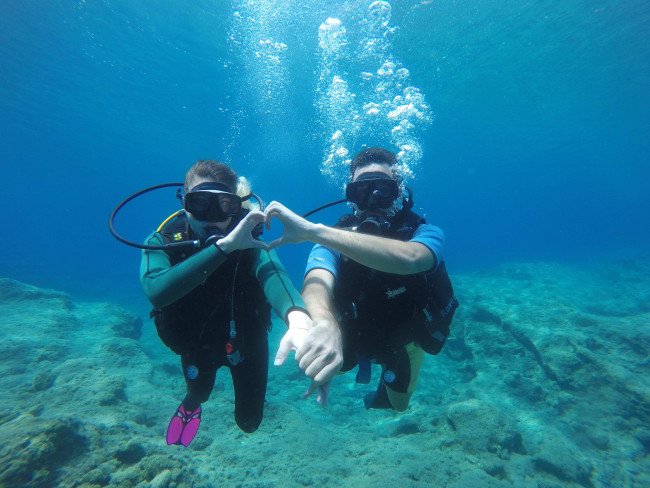
Before committing to certification, try a Discover Scuba Diving (DSD) session (2-3 hours). You'll practice basic skills in shallow water, then make a shallow open water dive (20-30 feet maximum) with close supervision.
Clear vision matters enormously during introductory dives. If you wear prescription glasses, ask about prescription mask options beforehand. The investment in a properly fitted prescription mask often means the difference between a frustrating first dive and a transformative one.
From First Dive to Confident Diver
Newly certified divers need 10-20 additional dives to develop genuine comfort underwater.
Skill Development Timeline:
● Dives 1-10: Consciously thinking about every action
● Dives 11-25: Skills become automatic, noticing more marine life
● Dives 26-50: Comfortable in various conditions
● Dives 50+: True proficiency emerges
Recommended Progression:
1. First 5-10 dives: Similar conditions to training (warm water, good visibility, 30-50 feet)
2. Next 10 dives: Gradually increase depth to 60-80 feet
3. After 20-30 dives: Consider Advanced Open Water certification
Planning Your Diving Journey
Questions to Ask Dive Centers:
● What's the instructor-to-student ratio? (Maximum 8:1, ideal 4:1)
● Where are certification dives conducted?
● What equipment is included in course price?
● What's the total time commitment?
Red Flags:
● Shops unwilling to answer questions
● Extremely low prices
● Promises of one-day certification
● Lack of instructor certification proof
Caribbean Excellence:
● Bonaire: Shore diving paradise with calm conditions
● Cozumel, Mexico: Drift diving with incredible visibility
● Cayman Islands: Protected waters ideal for learning
Pacific Treasures:
● Hawaii: Excellent visibility and sea turtles
● Philippines: Affordable diving with pristine reefs
● Thailand (Koh Tao): Warm water, low costs, excellent infrastructure
Taking the Plunge: Your Next Steps
Underwater sea diving is more accessible than most people think: try a Discover Scuba session at a PADI, SSI, or NAUI certified dive center, get certified through a reputable program for around $350-600, and invest early in well-fitted personal gear, especially your mask. The ocean covers 71% of our planet, so isn’t it time you explored it?







Comments
0 comment