
Does a White Shawl Make You Look Washed Out? 8 Styling Tricks to Add Contrast Without Losing Its Elegant Look
Learn how to style white shawls with the right colors, fabrics, and accessories to create an elegant look without appearing pale or washed out.

Many women love the elegance of a white shawl but hesitate before wearing one. The reason is simple. They worry that a light-colored shawl might make their face look dull or take away the natural warmth from their appearance.
A woman preparing for a winter wedding in Lahore once described this exact concern while choosing her outfit. She loved the delicate embroidery on a white shawl but felt that the overall look was too soft when she paired it with a light-colored dress. After changing only a few details, including adding a deeper outfit color, warm jewelry, and a more defined hairstyle, the same shawl looked completely different.
The shawl was never the problem. The styling around it was.
This is something many women experience with white clothing. White reflects light strongly, which is one reason it looks clean and elegant. However, when it is placed next to similar light shades without enough variation, it can reduce the visual contrast around the face. This may create the impression that the outfit looks flat or that the person appears less defined.
The solution is not avoiding white. The solution is understanding how to style it.
White has remained a timeless choice in fashion because it creates a simple foundation that allows other elements to stand out. Embroidery, jewelry, makeup, hairstyle, and outfit colors all become more noticeable when paired with white.
For Pakistani women, shawls have always been more than winter accessories. They are connected with weddings, family gatherings, cultural events, and traditional dressing. A beautifully crafted shawl can represent personal style while also carrying the history of textile craftsmanship.
Pakistan has a rich textile heritage built around weaving, embroidery, and regional craftsmanship. Textile researcher Nasreen Askari spent decades collecting and preserving Pakistani textiles because she believed fabrics carried stories about communities, traditions, and artistic skills. Her collection later became part of The Haveli textile museum in Karachi, which preserves important examples of Pakistan’s textile heritage.
This connection between fabric and identity explains why shawls continue to hold importance in Pakistani wardrobes. A white shawl is not simply a light-colored piece of clothing. When styled correctly, it can become one of the most graceful parts of an outfit.
The key is creating the right relationship between softness and contrast.
Here are eight styling techniques that help you wear a white shawl confidently while keeping its elegant appearance.
1. Pair Your White Shawl With Rich Colors for Natural Contrast
The easiest way to make a white shawl stand out is by pairing it with deeper colors.
A common styling mistake is choosing a completely light outfit with a white shawl and expecting the shawl to create the entire impact. While monochrome white outfits can look beautiful, they need texture, embroidery, or accessories to avoid feeling too plain.
A deeper color underneath gives the shawl a stronger background. The white becomes brighter, the embroidery becomes more visible, and the overall outfit gains more character.
For Pakistani formal wear, some combinations work especially well.
A white shawl with maroon creates a traditional wedding look. Maroon has a rich and warm appearance, while white adds softness. This combination is especially popular during winter because fabrics like velvet and silk naturally complement the contrast.
A white shawl with emerald green creates a luxurious festive style. The richness of green allows the simplicity of white to feel more refined.
A white shawl with navy blue creates a more elegant and sophisticated appearance. This combination works well for evening events where you want something graceful but not overly bright.
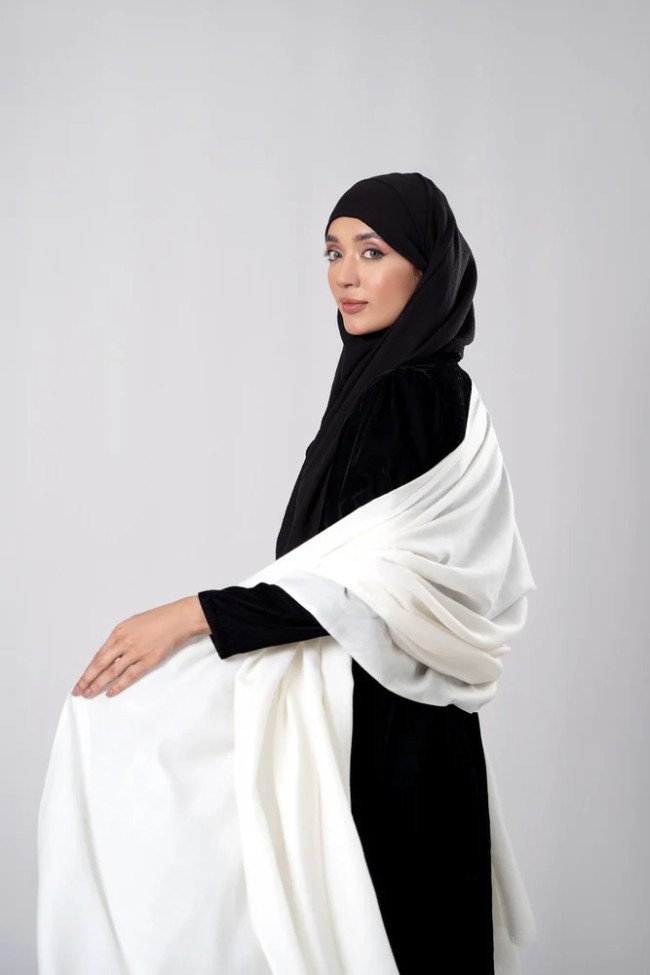
A white shawl with black creates a timeless contrast. The dark background allows embroidery, borders, and fabric details to become the focus.
The purpose of adding deeper colors is not to make the outfit dramatic. It is simply to give each element enough space to be noticed.
A woman wearing a deep-colored outfit with a white shawl often creates a more polished appearance because the colors support each other instead of blending together.
2. Choose the Right Shade of White for Your Skin Tone and Outfit
One important detail many people overlook is that white is not only one shade.
When someone says “white,” it can include many variations such as pure white, ivory, cream, pearl white, and off-white. Each shade creates a slightly different effect.
Pure white has a sharper and cleaner appearance. It often gives a modern and fresh feeling.
Ivory and cream shades create a softer and warmer impression. These shades are especially common in Pakistani formal wear because they pair beautifully with gold embroidery and traditional jewelry.
The reason choosing the right shade matters is because color interacts with your natural features. The same white shawl may look bright and elegant on one person but slightly harsh on another depending on skin undertones, lighting, and the colors worn underneath.
For example, an ivory shawl with gold detailing can create a warm bridal-inspired appearance. A bright white shawl with silver embroidery can create a cooler and more contemporary style.
Lighting also changes how white appears. A shawl that looks perfect under store lighting may appear different in daylight or under wedding hall lights.
Before choosing a white shawl, it helps to place it near your face and see whether it enhances your appearance or makes the overall look feel too pale.
The best shade of white is the one that works with you, not against you.
3. Let Embroidery and Fabric Details Create the Main Attraction
When wearing white, small details become more important.
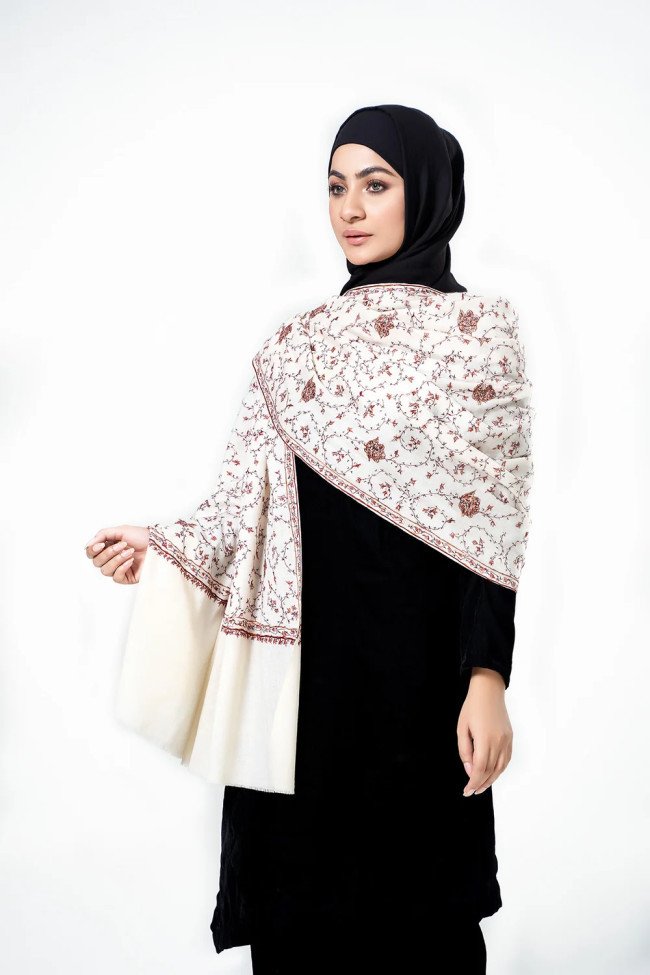
A plain white fabric creates simplicity, but embroidery and texture add depth. This is why embroidered shawls remain popular for weddings and formal occasions.
Traditional Pakistani textiles are known for detailed craftsmanship. Different regions have developed their own embroidery styles and decorative techniques, with artisans passing their skills from one generation to another.
A white shawl with detailed embroidery does not need bright colors to become noticeable. The craftsmanship itself creates interest.
A floral embroidered design can create a softer feminine appearance.
A detailed border can give the shawl a more formal and structured look.
Fine thread work can add a luxurious feel without making the outfit too heavy.
A textured fabric can make even a simple outfit appear more carefully styled.
This is especially useful for women who prefer minimal fashion. Instead of adding many colors or accessories, they can allow the fabric itself to become the highlight.
A carefully selected white shawls collection can offer different styling possibilities because embroidery, texture, and fabric quality help white feel unique rather than ordinary.
The beauty of white comes from the details people notice when they look closer.
4. Use Jewelry to Add Warmth Around the Face
A white shawl creates a soft frame around the face, which makes jewelry an important part of the overall look.
Since white is neutral, accessories become more visible. This allows jewelry to add warmth, tradition, and personality without changing the elegance of the outfit.
Gold jewelry is one of the most popular choices with white because warm gold tones create a beautiful contrast. This combination is commonly seen in Pakistani wedding fashion because it connects the simplicity of white with the richness of traditional styling.
Pearls create a softer and more delicate appearance. They work well for women who prefer a graceful and minimal look.
Silver or crystal accessories can create a more modern feeling, especially when paired with cooler shades of white.
For formal events, traditional pieces like jhumkas, delicate necklaces, or antique-style earrings can complement a white shawl beautifully.
However, the goal is not to add as much jewelry as possible.
White already has a calm and elegant presence. Too many accessories can compete with the shawl instead of improving the overall look.
A simple outfit with one carefully chosen statement piece often appears more refined than an outfit with too many details fighting for attention.
5. Use Makeup and Hairstyle to Bring Warmth to the Look
A white shawl naturally draws attention toward the face, which means makeup and hairstyle can influence how the complete outfit appears.
Because white reflects light, it can sometimes create a softer appearance around facial features. This is not a negative thing, but adding warmth and definition can help the outfit feel more balanced.
For Pakistani formal occasions, makeup does not need to be heavy. Small choices can create a noticeable difference.
Warm blush shades can bring freshness to the face. Soft bronze tones can add warmth, while rose, berry, or deeper nude lip colors can create a stronger connection between the face and the outfit.
The purpose is not to compete with the simplicity of the white shawl. The purpose is to make the complete appearance feel connected.
Hairstyle also plays an important role.
Loose waves can create a softer and more romantic look, especially with delicate embroidery or lighter fabrics.
A neat bun can create a more traditional and formal appearance, making it suitable for weddings and evening events where jewelry and shawl details need more attention.
For a simple family gathering or Eid event, a natural hairstyle with minimal makeup can work beautifully because the white shawl already adds elegance.
The best styling choices are usually the ones that support the outfit instead of making one element overpower everything else.
6. Combine Different Fabrics to Add Depth and Character
Color is only one part of styling. Fabric choice can completely change how a white shawl feels.
Many people focus on matching colors but forget that texture creates another layer of contrast. Two outfits can have similar colors but look completely different because of the fabrics used.
In Pakistani winter fashion, velvet is one of the most effective fabrics to pair with white shawls. The rich and heavy texture of velvet creates a strong background, allowing the softness of white to become more noticeable.
A white shawl over a maroon velvet suit, for example, creates a classic winter wedding look. The velvet gives warmth and richness, while the white shawl adds elegance.
Silk creates a smoother and more refined appearance. It works well for formal dinners, engagement events, and evening gatherings where you want a polished look.
Wool creates a more traditional winter feel. It is practical for colder areas while still maintaining a graceful appearance.
Lighter fabrics such as chiffon create a softer style that works well for indoor events and warmer weather.
This is why experienced stylists often focus on texture combinations. A white shawl does not always need a bold color underneath. Sometimes the difference in fabric is enough to create visual interest.
The right fabric combination allows the shawl to feel like a complete part of the outfit rather than an extra layer added at the end.
7. Add Small Color Details Without Losing the Elegance of White
Not every woman wants a dramatic contrast. Many prefer soft, elegant outfits where white remains the main focus.
In such cases, small details can create enough variation without changing the entire look.
A white shawl can be styled with a colorful handbag, a pair of statement earrings, an embroidered dress underneath, or even a deeper lipstick shade.
For example, a woman wearing an ivory outfit with a white shawl may feel that the look is too simple. Adding emerald earrings or a maroon clutch can introduce just enough color to make the outfit feel complete.
This approach works especially well for women who prefer minimal fashion. The idea is not to cover the beauty of white with too many additions. It is about giving the eye small details to notice.
Pakistani fashion often uses this technique. A simple base is combined with carefully chosen details such as embroidery, jewelry, or accessories to create a memorable appearance.
The most elegant outfits are often not the ones with the most elements. They are the ones where every element has a clear purpose.
8. Choose the Right Draping Style for the Occasion
The way a shawl is worn can change the entire appearance of an outfit.
A beautifully designed white shawl can lose its impact if the embroidery is hidden or the fabric is arranged in a way that removes its natural shape.
Different occasions call for different draping styles.
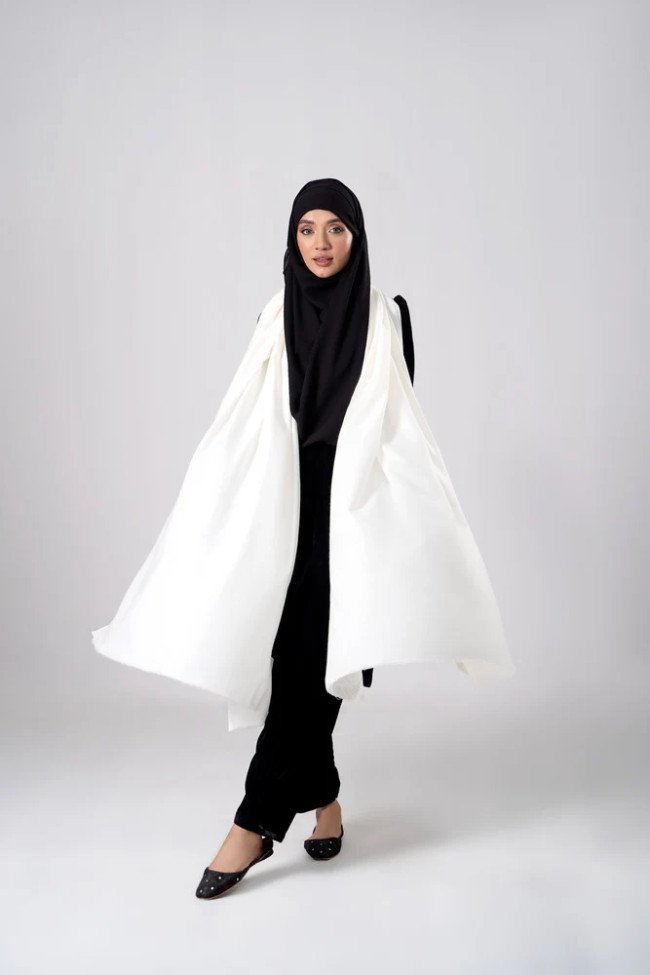
For weddings and formal events, a one-shoulder drape works beautifully because it allows the embroidery and border to remain visible. It creates a graceful silhouette while keeping the shawl as part of the overall outfit.
An open-front style works well when the dress underneath has a contrasting color. The white shawl frames the outfit and allows both pieces to be appreciated.
For winter gatherings, a wrapped style creates comfort while maintaining elegance. This works especially well with wool or heavier shawls.
A classic Pakistani shoulder drape remains popular because it works with long shirts, formal suits, and traditional dresses.
The best draping style depends on the design of the shawl and the occasion. A heavily embroidered shawl deserves to be displayed, while a simple everyday piece can be styled more casually.
White Shawl Styling Ideas for Different Pakistani Occasions
The beauty of a white shawl is that it can adapt to different events.
For winter weddings, richer combinations usually work best. A white shawl with velvet, silk, gold jewelry, and traditional embroidery creates a formal appearance suitable for evening celebrations.
For Eid gatherings, softer styling often works better. A lighter outfit, elegant makeup, and a delicate white shawl can create a graceful festive look without feeling too heavy.
For family dinners or formal meetings, a minimal approach can be more effective. A simple dress with a well-draped white shawl and subtle accessories can look sophisticated.
For colder areas such as northern Pakistan, thicker shawls provide warmth while still maintaining traditional style.
The important thing is understanding that the same shawl can create different looks depending on how it is paired.
Common Mistakes That Can Make a White Shawl Look Less Elegant
A white shawl rarely looks wrong because of its color. Usually, the styling choices around it create the problem.
One common mistake is wearing too many similar light shades without adding texture. An outfit made entirely of plain white or cream can look beautiful, but it needs embroidery, fabric differences, or accessories to create depth.
Another mistake is ignoring the importance of the outfit underneath. A shawl is not worn separately. The dress color, fabric, and design all influence how the final look appears.
Some women also hide the best parts of the shawl through incorrect draping. If the embroidery, border, or fabric details are covered, the craftsmanship cannot become part of the outfit.
Another mistake is choosing accessories that are too strong. Since white is elegant and calm, overly bold accessories can shift attention away from the shawl.
The goal is not to add more elements. The goal is to create harmony between the pieces you already have.
Why White Shawls Continue to Represent Timeless Elegance
The popularity of white shawls comes from their ability to feel both traditional and modern.
In Pakistan, clothing has always carried cultural meaning. Textile traditions, embroidery techniques, and handcrafted fabrics represent generations of artistic knowledge.
The preservation work of textile researchers like Nasreen Askari shows that fabrics are not only fashion items. They are part of cultural history. A shawl can represent craftsmanship, memories, and personal connections.
This is why many women keep special shawls for important occasions. A piece worn at a wedding, Eid gathering, or family celebration often becomes connected with a personal memory.
White has a special place because it allows those details to become visible. It does not overpower embroidery, jewelry, or the person wearing it.
Instead of thinking of white as a difficult color, it is better to see it as a flexible foundation. With the right styling choices, it can create a look that feels graceful, confident, and timeless.
Creating Your Perfect White Shawl Look
A white shawl does not make you look washed out. The wrong combination of colors, textures, and styling choices can sometimes create that effect.
The beauty of white comes from how it works with everything around it.
A deeper outfit color can make it stand out. The right jewelry can add warmth. Embroidery can bring detail. Fabric choices can create richness. A thoughtful draping style can highlight the craftsmanship.
Whether you are attending a winter wedding in Lahore, celebrating Eid with family, or creating a simple elegant outfit for a formal event, a white shawl can become the piece that brings everything together.
The secret is not changing the shawl. It is understanding how to style it.
When the right elements come together, white does not look plain. It looks refined, traditional, and effortlessly elegant.
Frequently Asked Questions
Does a white shawl suit every skin tone?
Yes, but the shade of white matters. Some people look better in bright white, while others may prefer ivory, cream, or pearl shades. The outfit color, lighting, and accessories also affect the final appearance.
What colors create the best contrast with a white shawl?
Rich shades like maroon, emerald green, navy blue, black, and deep brown create strong contrast. Softer colors can also work when embroidery or texture adds depth.
Can white shawls be worn at Pakistani weddings?
Yes. White and ivory shawls work beautifully for weddings when paired with rich fabrics, embroidery, and traditional jewelry.
How can I make a simple white shawl look more luxurious?
Focus on fabric quality, embroidery details, proper draping, and thoughtful accessories. Small styling choices often create a stronger impact than adding too many elements.
Is ivory better than pure white for formal wear?
Both can look elegant. Pure white creates a cleaner and sharper appearance, while ivory creates a softer and warmer traditional look.
Are white shawls only suitable for winter?
No. The fabric determines when a shawl works best. Wool and heavier fabrics are ideal for winter, while silk and lighter materials can work for indoor events and warmer seasons.













Comments
0 comment